
Clean Beauty & Sustainable Korean Skincare Brands to Watch
Let’s skip the small talk. You want the names, the vibe, the truth about sustainable Korean skincare brands – and whether “clean beauty” actually means anything beyond pretty leaf icons on a box. Short version? Some brands are genuinely doing the work (recyclable packs, safer sourcing, cruelty-free), others are just good at green paint. We’ll sort the difference, and yes, I’ll point you toward eco-friendly K-beauty you can feel good about using on a Tuesday night with your sheet mask and a k-drama.
Wait – what even counts as “sustainable” in beauty?
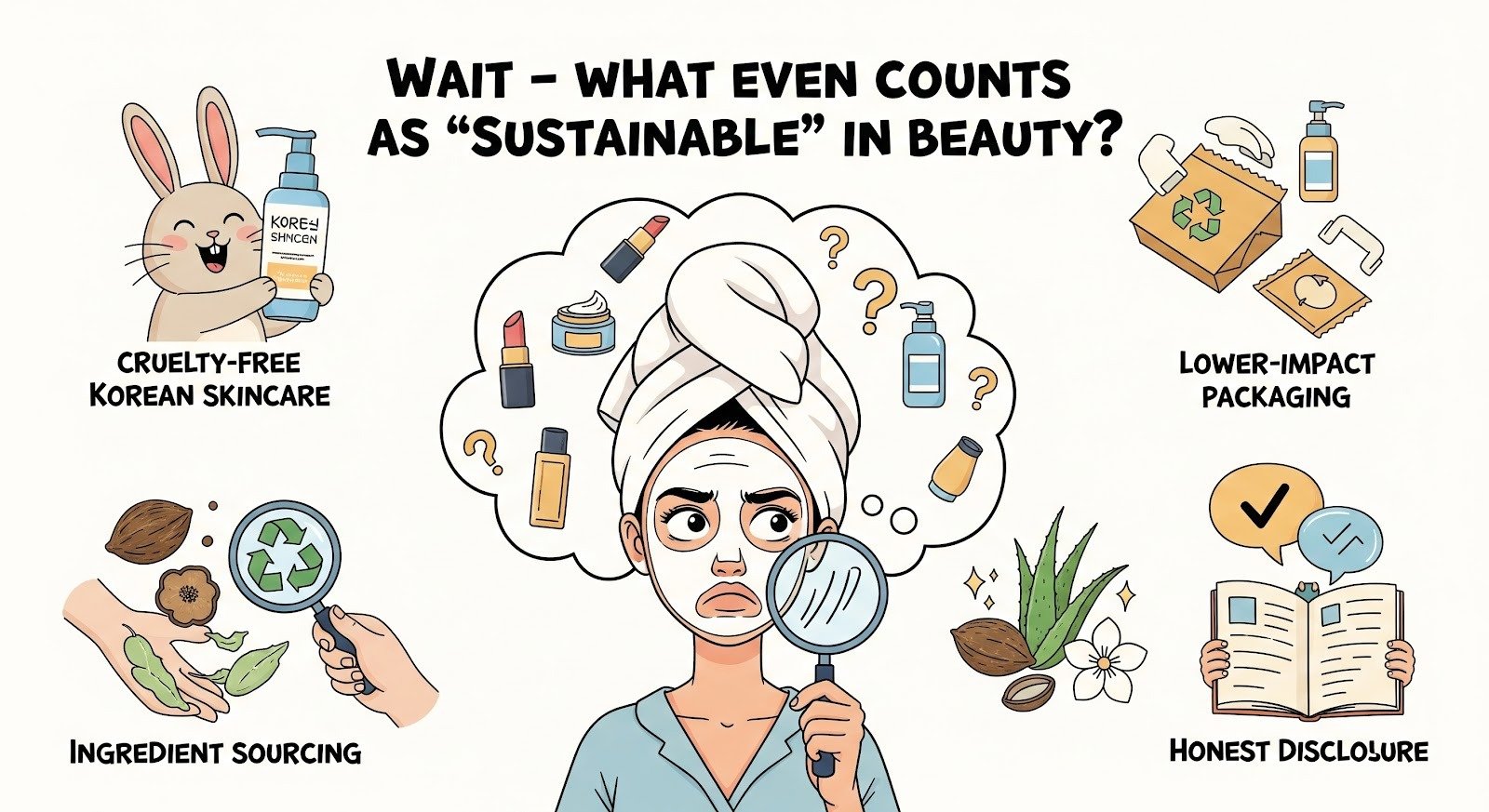
Honestly? It’s messy. “Clean beauty brands” isn’t a regulated category. One company’s “pure” is another brand’s “nice try.” Dermatologists keep saying the same thing: clean isn’t a legal term, safety and evidence are what matter, plus patch testing for sensitive folks. Sustainability, though, has some anchors you can check:
- Cruelty-free Korean skincare: no animal testing, ideally third-party verified.
- Lower-impact packaging: post-consumer recycled plastics, glass, refillable systems, or genuinely plastic-free skincare where it makes sense.
- Ingredient sourcing: fermented botanicals, upcycled extracts, responsibly grown actives.
- Honest disclosures: carbon footprints, supply-chain summaries, recycling guidance.
If a brand talks about forests on Instagram but ships layers of plastic bubble wrap? Red flag.
Quick skin note: Sensitive skin? Sustainable doesn’t have to mean “weak.” It means thoughtful formulas and better design. Derms will tell you – focus on patch-testing and barrier-friendly basics while you explore vegan skincare Korea options.
Green K-Beauty: the checklist you can actually use
Before we dive into brands to watch, here’s the little checklist I keep on my phone (scruffy but useful):
- Is the brand cruelty-free? (Check their own policy + a recognized database.)
- Do they offer refills or concentrated formats? Powders, bars, essences in glass.
- Clear ingredient lists? No mystery “fragrance soup.”
- Packaging take-back or recycling tips? Even better if they partner with recyclers.
- Do they discuss “sustainability in beauty” beyond slogans? Targets, timelines, proof.
If three or more of these are a yes, I keep reading. If not… next.
Sustainable Korean Skincare Brands to Watch (no fluff, real reasons)
Note: availability changes by region, and lines evolve. Always peek at each brand’s latest sustainability page before you click “add to cart.”
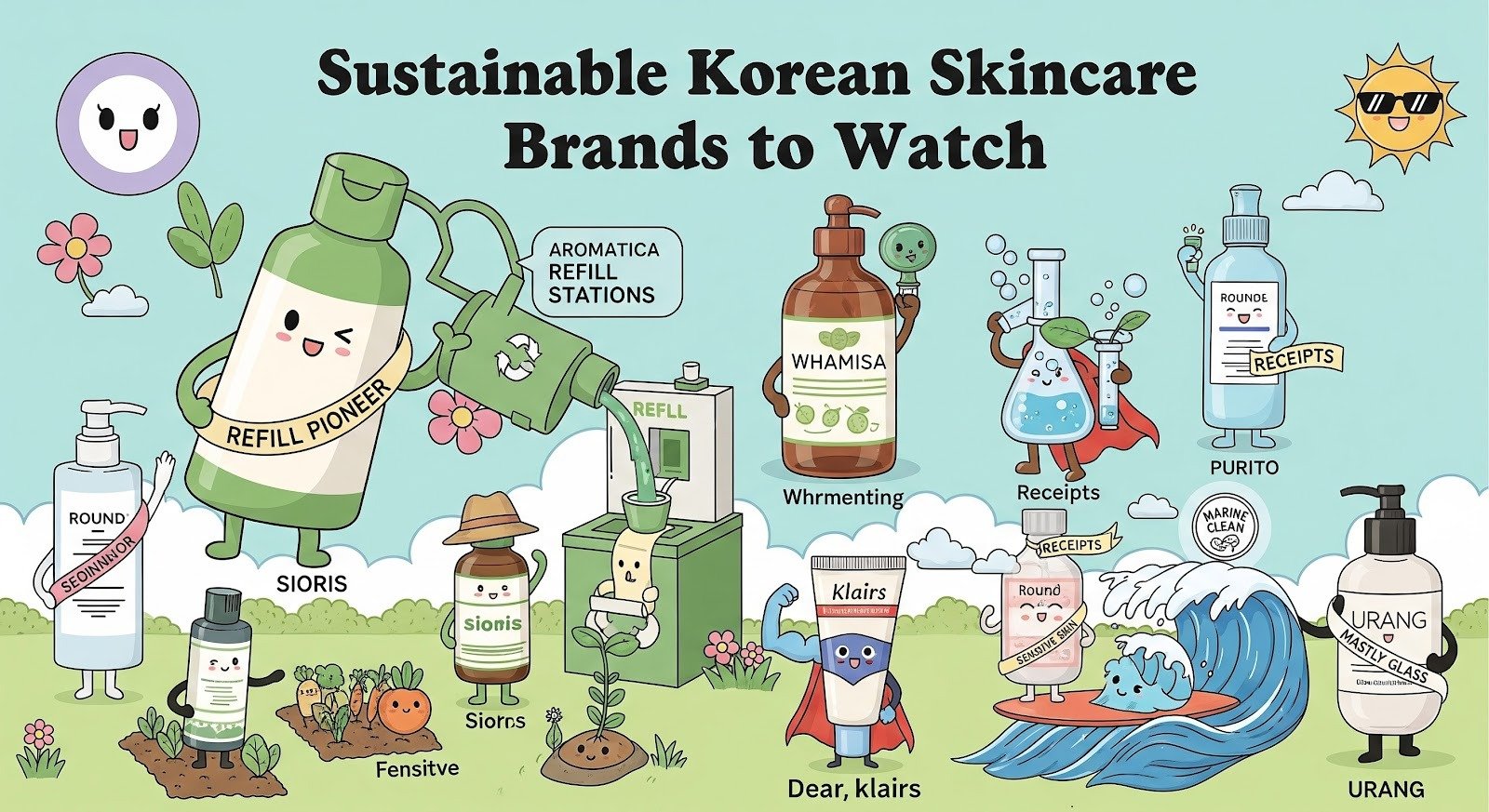
1) Aromatica – the refill pioneer energy
Aromatica leans hard into eco-design: recycled PET bottles, glass when practical, and refill pouches for bestsellers. Formulas are minimalist, botanical, often vegan, and the textures are “my skin can breathe again.” If you’re dipping your toes into eco-friendly skincare, their cleansers and oils are a safe bet.
Why they’re on my list: consistent packaging choices, not just one limited drop with a green label.
2) Sioris – seasonal, short-farm-to-bottle
Sioris talks harvest dates (yes, really). They use in-season local Korean ingredients and keep formulations short and sweet. Glass, paper, and clear recycling guidance. If you love the “fresh juice for skin” vibe without sticky marketing claims, this is your lane.
Why watch: transparent sourcing + gentle formulas that suit sensitive skin.
3) Whamisa – fermentation done thoughtfully
Classic green K-beauty player. Whamisa leans on skincare fermentation to unlock potency from botanicals (hello, less waste and potentially lower concentrations needed). You’ll see recyclable glass, paper, and a steady nudge toward ethical skincare brands practices.
Why watch: long-time consistency, fermented toners and lotions that comfort stressed skin.
4) Purito – comeback kid with receipts
After ingredient-label drama years back, Purito rebuilt trust by over-documenting. Cruelty-free, many vegan options, and simpler packaging that doesn’t scream for attention. Their centella and unscented lines are barrier-friendly, and a solid entry for affordable sustainable skincare from Korea.
Why watch: humility + transparency + reliable “daily driver” formulas.
5) Dear, Klairs – sensitive-skin pragmatist
Gentle, fragrance-minimal choices, widely available, emphasis on cruelty-free. They’ve increased recyclable components and keep formulas calm (which sensitive folks appreciate). Not the loudest brand, but reliably soothing.
Why watch: steady improvements to packaging, still very accessible.
6) Round Lab – marine clean done cleaner
Known for birch sap hydrating lines and coastal inspiration. The reason they’re here: better labeling, more recyclable parts, and an industry push toward measured claims. Lightweight textures that suit humid climates (Dhaka humidity crew, I see you).
Why watch: mass-appeal hydration + evolving sustainability comms.
7) Aromatica x Refill Stations (yes, again) – the blueprint
Worth a second shout, because refilling is the quiet revolution. If your store carries refill pouches, that’s a real-world footprint cut. Ask your local stockist, sometimes they’ll bring them in if enough people request.
Why watch: refills reduce plastic and shipping weight. Simple math.
8) Urang – minimal, elegant, mostly glass
Urang does short lists, beautiful oils, and glass packaging. Small-batch energy without the drama. Expect gentle scents (or none), and formulas that let skin sit quietly and repair.
Why watch: glass, clarity, and sensorial calm.
Ingredients with a greener halo (and why your skin might love them)
- Fermented ingredients (rice, barley, tea): often require lower percentages to achieve similar effects, the fermentation step can increase bio-availability and create skin-friendly byproducts.
- Upcycled extracts (fruit peels, leftover seeds): less waste, more cleverness.
- Barrier builders (ceramides, squalane, panthenol): sustainable and sensible – support skin so you need fewer “quick fixes.”
- Fragrance-free or essential-oil-light options: better for reactive complexions and also simpler for ecosystems.
As one board-certified dermatologist put it to me a while back – paraphrasing here – don’t romanticize “clean,” just pick formulas that respect your barrier and the planet at the same time. Sensible beats trendy.
How to build a sustainable K-beauty routine (without losing the joy)
Because yes, you can love your toner AND care about the ocean.
- Edit the steps. Seven skins? Sometimes overkill. Try three or four: cleanse → essence/toner → serum → moisturizer/SPF.
- Pick one refillable or glass product per category. Tiny habit, big ripple.
- Concentrates over bulk. Powders and solid bars can cut water weight (and packaging).
- Use it up. The greenest product is the one you finish. No graveyard of half-used jars.
- Recycle like you mean it. Rinse, separate pumps, follow local rules (they’re annoying, do them anyway).
Little personal opinion: I’d rather have two excellent, cruelty-free and clean Korean skincare staples I adore than eight “meh” things cluttering my sink. And wallet.
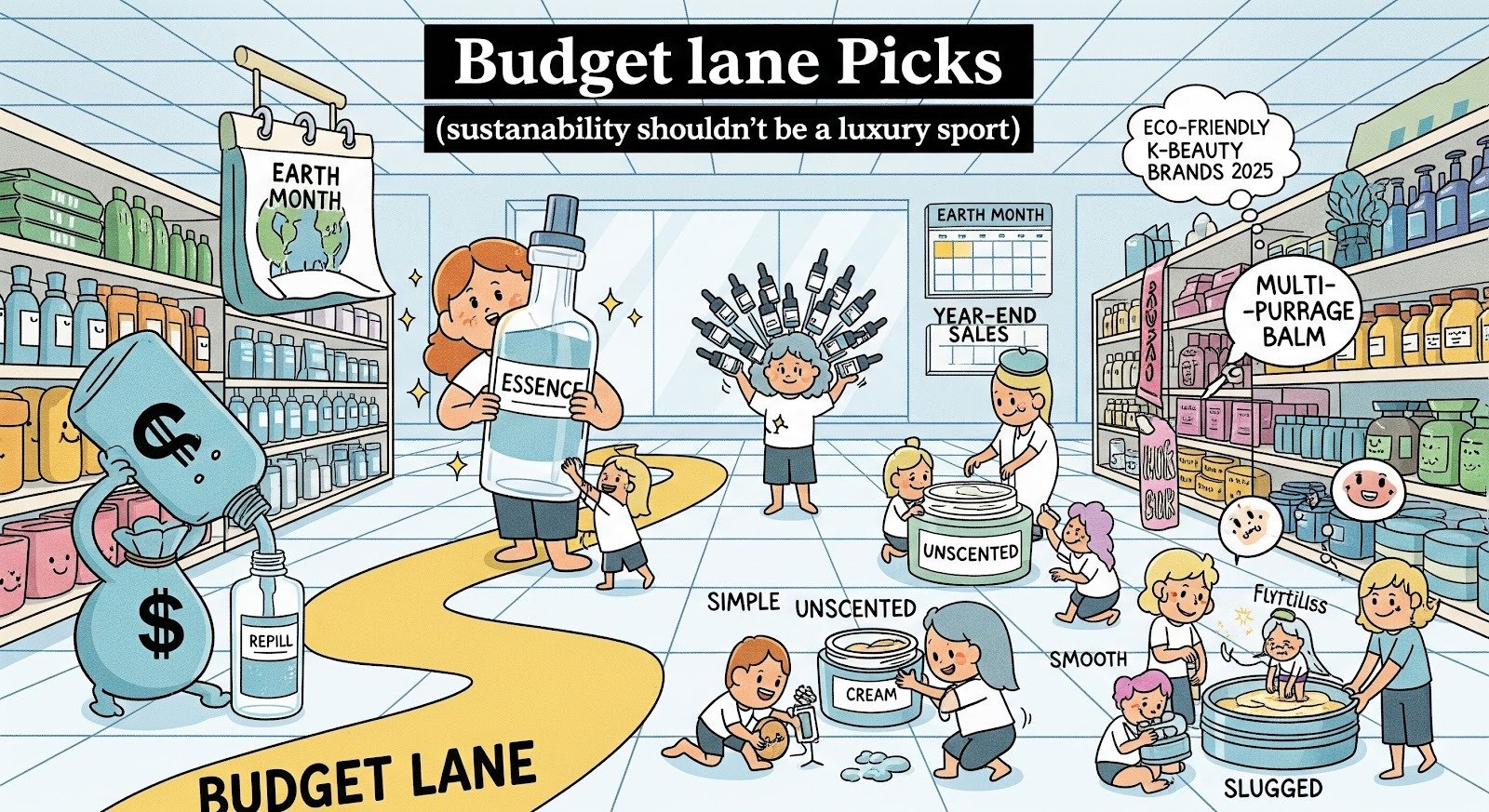
Budget lane picks (because sustainability shouldn’t be a luxury sport)
- Refill pouches save money long-term.
- Essences > twelve serums. One hydrating workhorse beats a juggling act.
- Unscented lines tend to be cheaper (and play nicer with sensitive skin).
- Multipurpose balms for slugging, cuticles, flyaways – one tin, many jobs.
Hunt for seasonal promotions, “eco-friendly K-beauty brands 2025” will keep dropping value sets around Earth Month and year-end sales.
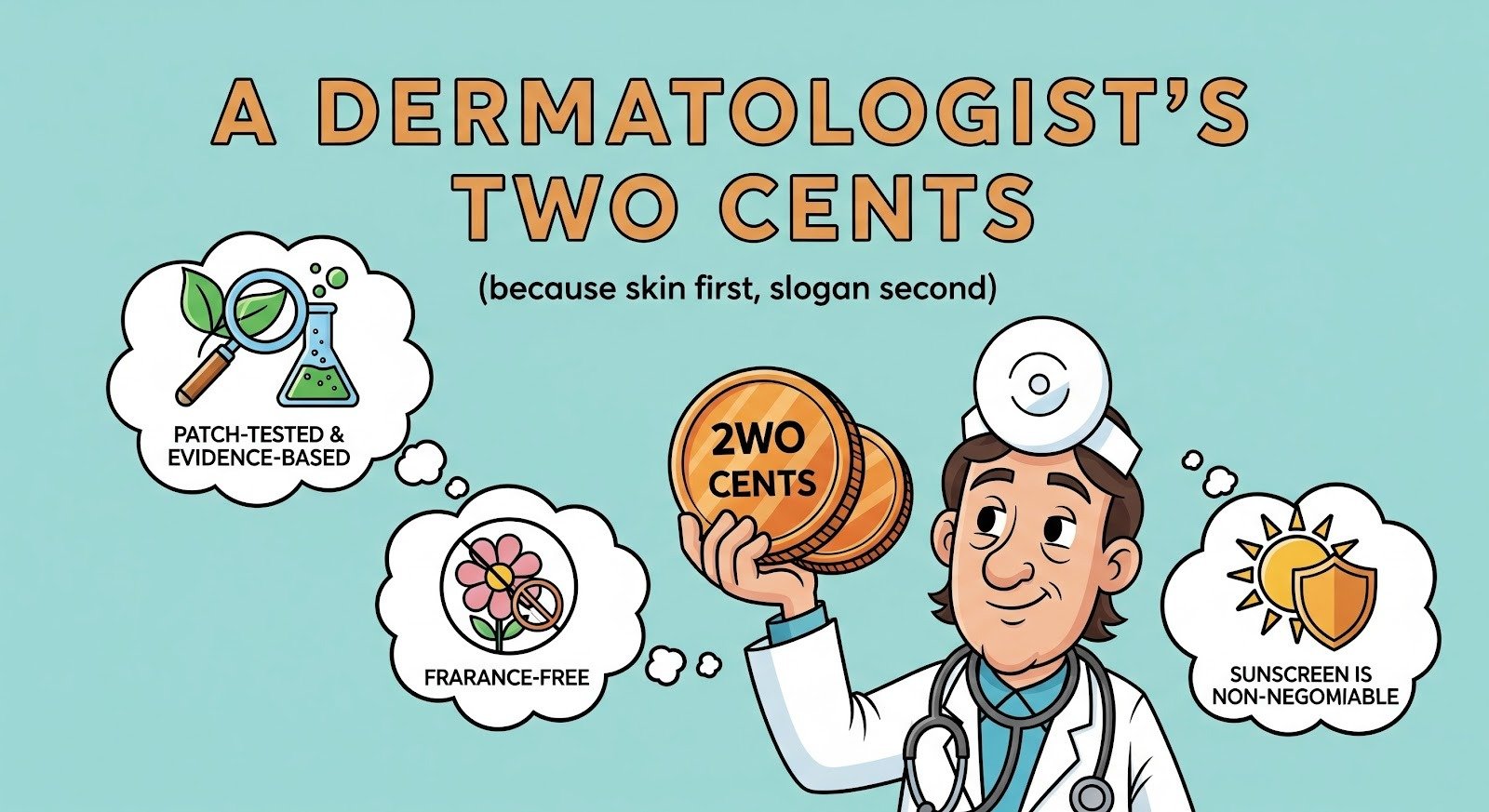
A dermatologist’s two cents (because skin first, slogan second)
Derms keep coming back to three ideas:
- “Clean” isn’t a regulated badge – look for patch-tested, evidence-based formulas.
- Fragrance-free or low-fragrance helps sensitive types stay consistent.
- Sunscreen is non-negotiable, the most sustainable routine is the one that prevents damage you’d later need to fix.
If you have eczema, acne, or melasma, loop your dermatologist in as you switch to ethical skincare brands. Many are excited about gentler, greener tech (biotech-derived actives, precision ferments) but will help you avoid surprise flare-ups.
FAQs (quick, honest, no fluff)
Q: What are the best sustainable Korean skincare brands right now?
A: Aromatica, Sioris, Whamisa, Purito, Dear, Klairs, Urang – strong bets. Always check each brand’s latest cruelty-free policy, packaging notes, and ingredient disclosures.
Q: Are “clean beauty brands” automatically safer for sensitive skin?
A: Not automatically. Fewer irritants? Often yes. But “clean” isn’t a guarantee – patch test, especially if essential oils are involved.
Q: I want plastic-free. Is that realistic?
A: Sometimes. Glass jars, aluminum tubes, bar cleansers, paper cartons. Pumps are tricky, look for brands trialing mono-material or pump-free designs.
Q: Can fermented skincare be part of sustainability?
A: Absolutely. Fermentation can increase potency at lower doses and reduce waste. Plus, many fermented essences are gentle, which helps long-term skin compliance.
Q: Any truly affordable sustainable Korean options?
A: Purito and Dear, Klairs have accessible lines, refills help. Also watch pharmacy chains and local stockists for eco-sets and simple, fragrance-light hydrators.
One last thing (a tiny, imperfect aside)
I used to buy “green” serums because the box looked like a forest. Silly, I know. These days, I peek at refill options, ingredient plain-speak, and whether the brand talks logistics (not just lavender fields at golden hour). It’s not about being perfect. It’s about making better choices most of the time – and still enjoying your routine. Skin care should be a delight, not a guilt trip.So yes: choose sustainable Korean skincare brands that are actually doing the work. Keep your routine short, kind, and consistent. And when in doubt? Patch test, breathe, moisturize, SPF. The planet – and your barrier – will thank you later.