Fermented Skincare: Everything You Need to Know
Quick answer (so you can get on with your day):
Fermented skincare uses tiny helpers – yeast and friendly bacteria – to “pre-digest” ingredients into smaller, more active bits your skin can actually use. Translation: better absorption, more glow, and a happier microbiome.
- Fermented skincare = boosted absorption + amped-up potency.
- It grew up in K-beauty and plays nicely with probiotic science.
- Calms, hydrates, and supports your skin’s microbiome.
- Generally a win for most skin types, even the fussy, sensitive ones.
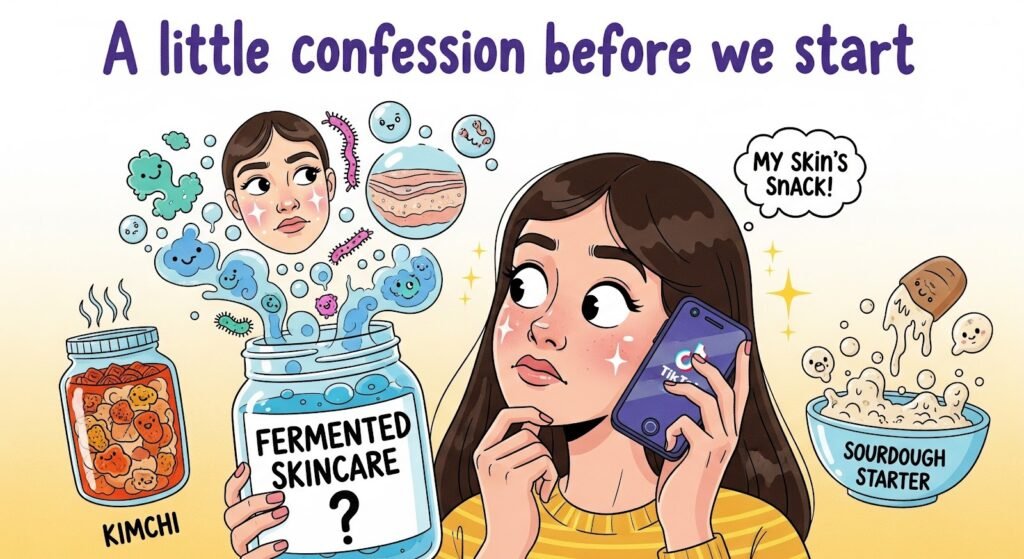
A little confession before we start
I didn’t “get” fermented skincare at first. The word fermented made me think of kimchi in my fridge and a slightly chaotic sourdough starter. On my face? Really? But curiosity (and, TikTok) won. After a few weeks of testing, my skin felt calmer, less reactive, a bit brighter. Not glass skin – let’s be honest – but my skin looked more comfortable. Like it finally had a decent snack.
So, what’s going on under the hood?
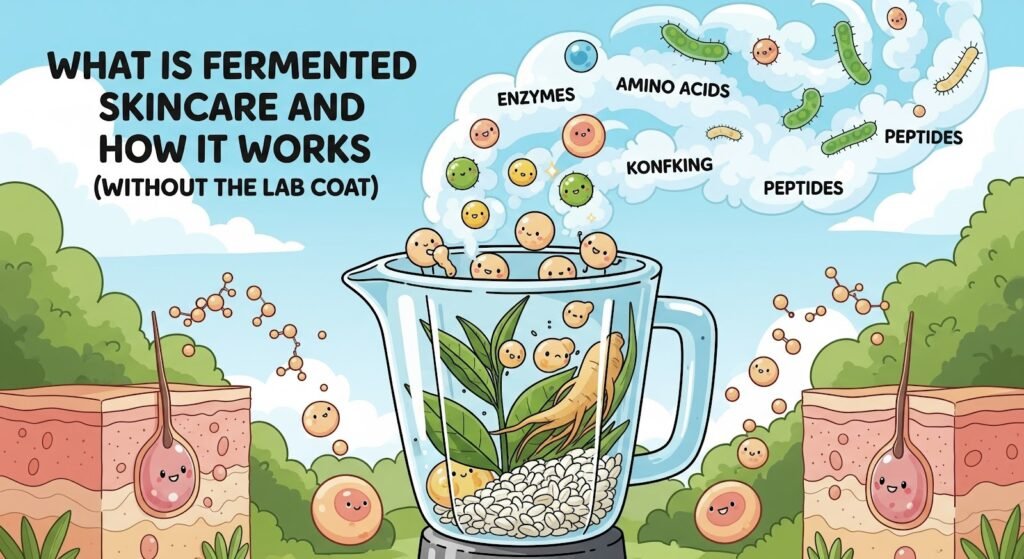
What is fermented skincare and how it works (without the lab coat)
Think of skincare fermentation as nature’s mini blender. Microorganisms – usually yeast or good bacteria – nibble away at natural ingredients like green tea, ginseng, or rice bran. As they munch, they release helpful byproducts: enzymes, amino acids, peptides. The big, clunky molecules get broken into tiny ones your skin can drink up more easily. Less sitting on the surface. More “yep, I can use this.”
One derm put it to me in the simplest way: fermentation makes strong ingredients feel gentler while keeping (sometimes even boosting) their benefits. I buy that. When your skin is sensitive – or just in a mood – this matters.
Derm note: “Fermentation helps stabilize and enhance the potency of skincare actives while making them gentler for sensitive skin,” says dermatologist Dr. Madhuri Agarwal.
If vitamin C and retinoids make your skin tingle or flush, fermented alternatives might give you a similar payoff with fewer fire alarms. (Been there.)
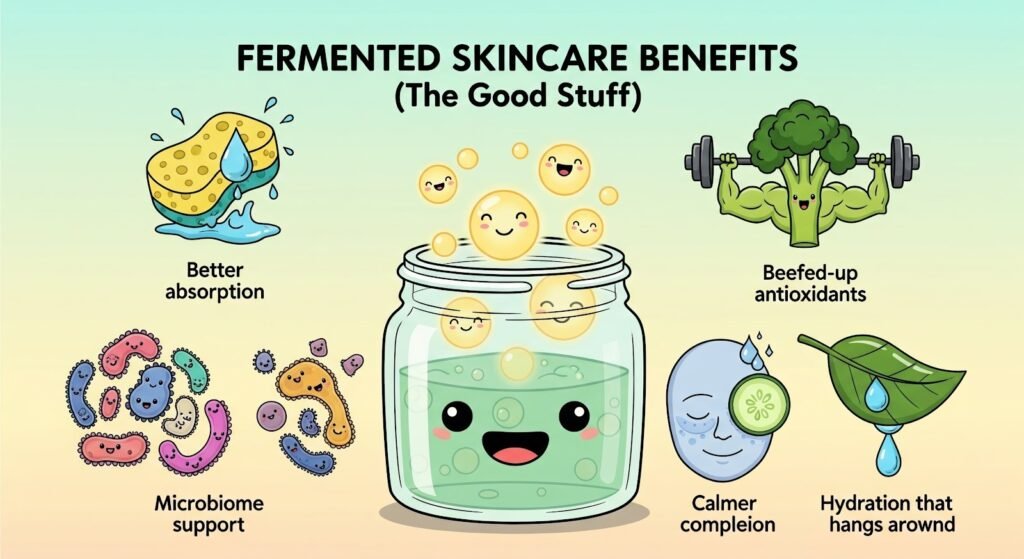
Fermented skincare benefits (the good stuff)
1) Better absorption
Smaller molecules slip through your skin’s outer layer more easily – so more of what’s in your bottle actually ends up helping your face. Less waste. Faster “oh, I see it” results.
2) Beefed-up antioxidants
Fermentation can boost levels of skin-loving compounds (amino acids, vitamins, peptides). That can support repair after daily stressors – sun, screens, city air, the usual suspects.
3) Microbiome support
Your skin has its own community of good bugs (adorable and a little weird, I know). Fermented products often contain probiotics and postbiotics that help keep that tiny ecosystem balanced.
4) Calmer complexion
Many fermented formulas lean soothing, not stingy. Great if you’re redness-prone, easily irritated, or you overdid it with exfoliants last week (oops… me).
5) Hydration that hangs around
Ferments like galactomyces or bifida ferment lysate help fortify the skin barrier. Barrier happy ⇒ moisture stays put ⇒ skin looks bouncy, not cranky.
The greatest hits: best fermented skincare ingredients
|
Ingredient |
Source |
What it tends to do |
|
Yeast extract |
Brightens tone, refines texture, helps balance oil | |
|
Bifida Ferment Lysate |
Probiotic strain |
Supports barrier, helps skin bounce back from stress |
|
Fermented Rice Water |
Rice bran |
Cushy hydration and a soft glow |
|
Fermented Green Tea |
Tea leaves |
Antioxidant shield + calming effect |
|
Lactobacillus Ferment |
“Good” bacteria |
Soothes sensitivity, subtle firmness over time |
You’ll find these across K-beauty shelves – brands like SK-II, Missha, and Su:m37° have been playing the fermentation game for ages.
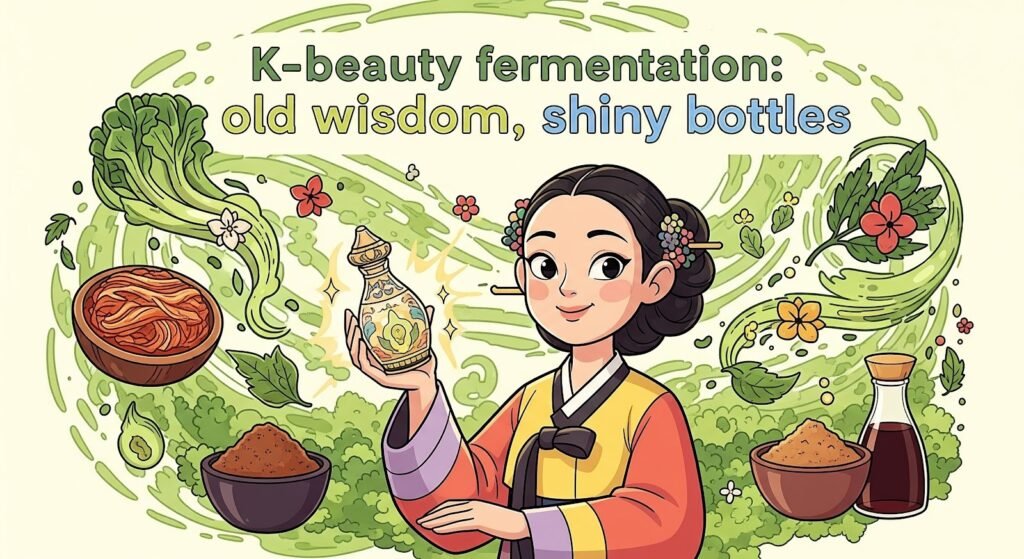
K-beauty fermentation: old wisdom, shiny bottles
Fermentation isn’t a fad; it’s heritage. The idea comes from traditional Korean and Japanese methods for enhancing food – think miso, soy, kimchi. Beauty simply borrowed the blueprint. If fermentation can unlock extra goodness in food, why not do the same for botanicals in skincare?
What I love about K-beauty’s approach: gentle, layered, consistent. Controlled fermentations keep things clean and stable; the formulas feel elegant instead of fussy. Nature + science holding hands.
Is fermented skincare good for sensitive skin?
Short answer: usually, yes. Fermentation often reduces harsh edges in potent actives, so they play nicer with easily-annoyed skin.
Derm note: Dermatologist Dr. Niketa Sonavane points out that fermented formulas can “reduce the risk of skin barrier disruption while providing intense nourishment.”
Caveat (there’s always one): patch-test first if you’re highly reactive. Some products still contain natural acids or essential oils. Go slow; your face will thank you.
Where to start: a fermented essence or toner. Light, splashy, easy to tuck between cleansing and serum. Low drama.
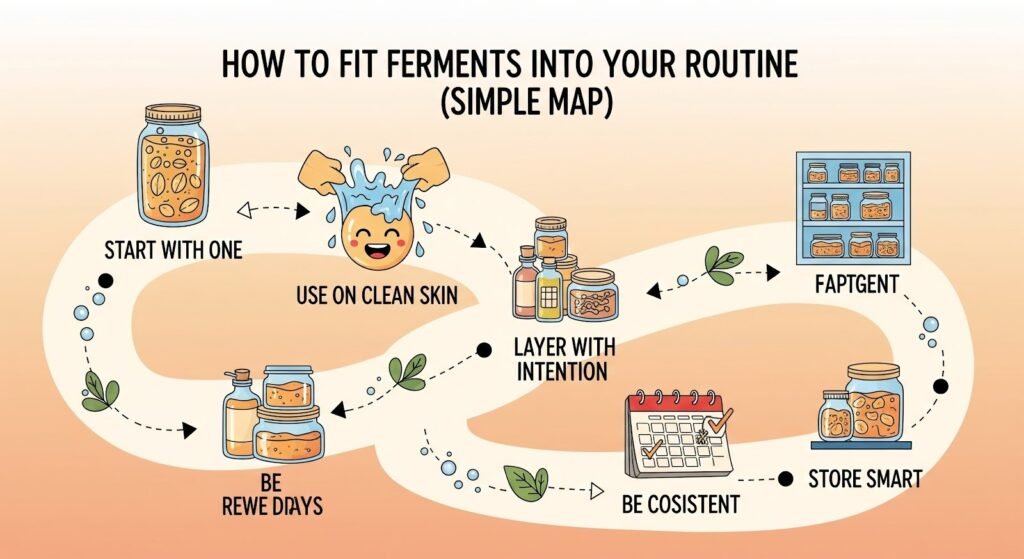
How to fit ferments into your routine (simple map)
- Start with one – Pick a single fermented product to test (essence, toner, or a simple serum).
- Use on clean skin – After cleansing, before heavier serums or creams.
- Layer with intention – Fermented serums love barrier creams and ceramide moisturizers.
- Be consistent – Give it 2–3 weeks. Skin likes routines.
- Store smart – Keep away from direct heat and sunlight so the good stuff stays good.
Tiny tip: if you’re using actives like retinoids or exfoliating acids, alternate days rather than piling everything on at once. Your barrier is not a superhero cape.
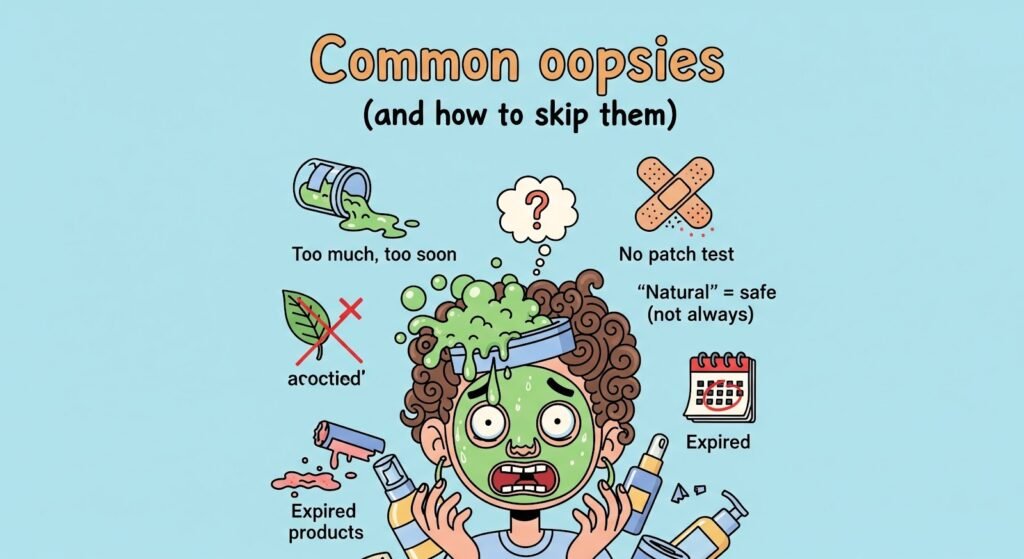
Common oopsies (and how to skip them)
- Too much, too soon: Stacking multiple fermented actives can overwhelm sensitive skin. Start small.
- No patch test: A dab behind the ear or on the jawline can save you a week of “why is my face mad.”
- “Natural” = safe (not always): Some ferments use alcohol or essential oils for preservation. Read the label; your skin’s preferences matter.
- Expired products: Fermentation involves living or once-living cultures. Respect those dates.
Why fermented skincare matches “slow beauty”
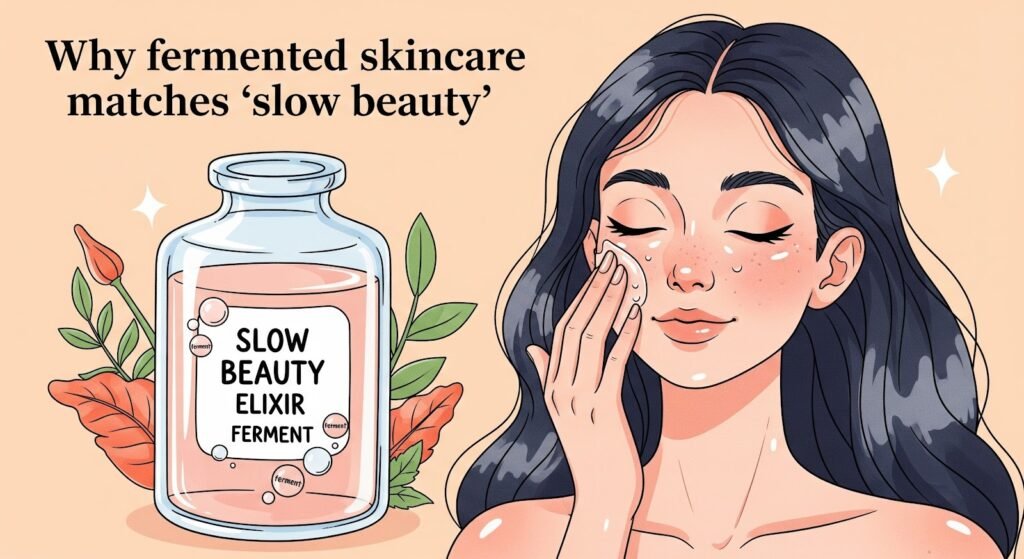
Fast results are fun until your barrier taps out. Fermented skincare leans toward steady, sustainable wins – hydration that sticks, irritation that chills out, texture that quietly smooths. It’s the equivalent of eating balanced meals rather than energy drinks. Not flashy every day, but two months in you notice: hey, my skin is… behaving.
And it feels good to use. There’s a ritual to patting on an essence that smells faintly herbal and sits weightless under makeup. Simple pleasures.
FAQs (the ones everyone asks)
A quick story (because skincare is personal)
The week I tried a fermented essence consistently, I also had three late nights, one spicy ramen emergency, and a city-air marathon. Historically, that’s a guaranteed redness-fest. This time? My skin shrugged. Not perfect, not porcelain – just… fine. Which, for those chaotic weeks, is basically a miracle.
Maybe it was the extra amino acids. Maybe a happier microbiome. Or maybe my skin simply enjoys feeling understood. (Skin is moody; we roll with it.)
Final thoughts: let your skin sip, not chug
Fermented skincare isn’t magic. It’s smart chemistry with a soft touch. If you’re chasing healthier texture, better hydration, and fewer flare-ups, it’s absolutely worth a try – especially if your face hates being rushed.
Start with one product. Give it time. Watch how your skin behaves when it’s fed instead of forced. And if it helps, keep this little mantra handy: slow beauty, strong barrier, steady glow.
P.S. If you want recs tailored to your skin (oily, dry, mal-dehydrated, suspiciously combo), tell me your current routine and what bugs you most. We’ll build a no-drama, fermented-friendly lineup you’ll actually use.